Rural Healthcare Careers
Rural Healthcare Jobs: What Nurses Should Check Before Applying
Rural healthcare jobs can be a smart career move when the pay, backup, commute, housing, and clinical support all make sense.
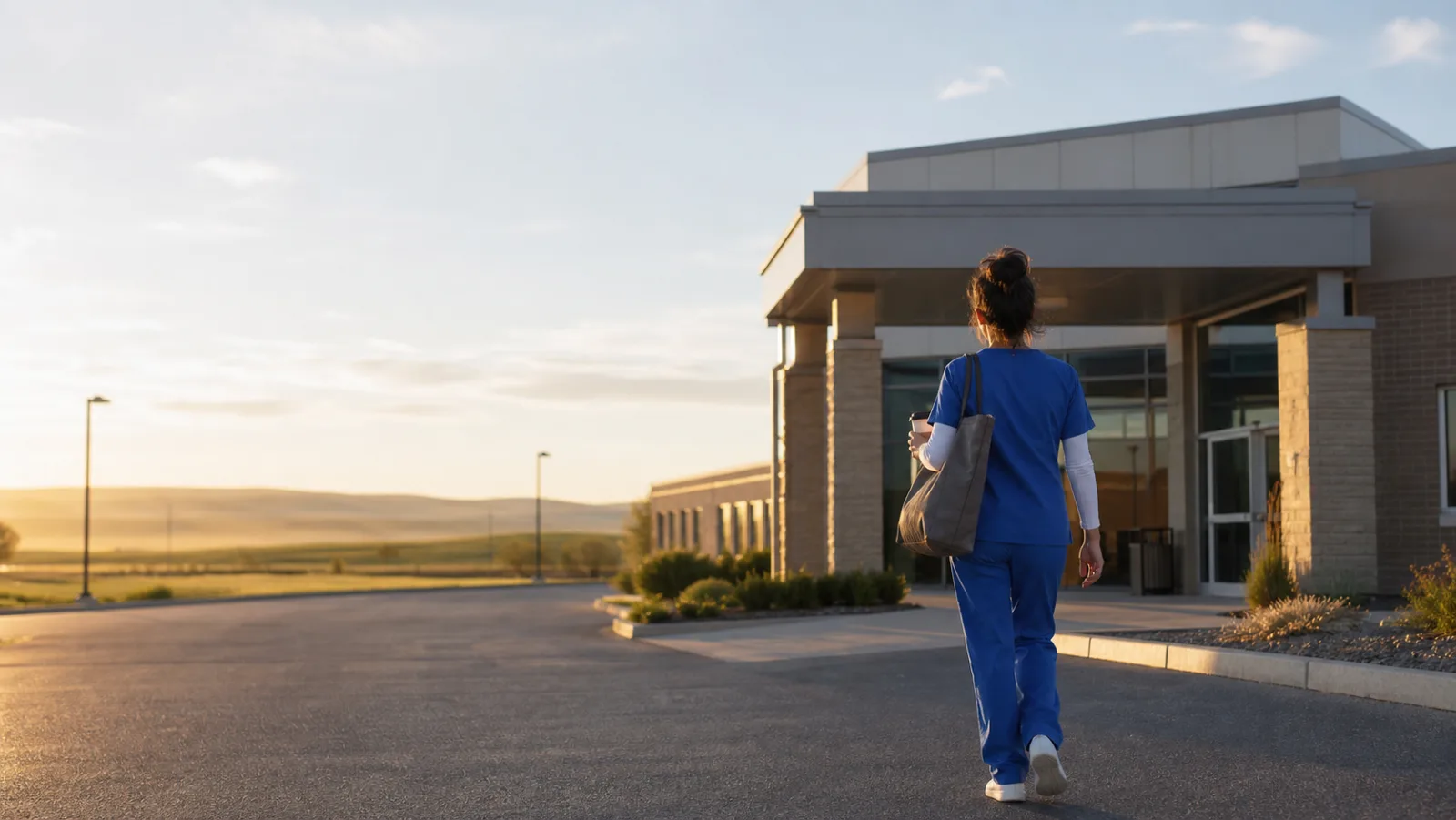
Rural healthcare jobs get described in lazy extremes. One version makes them sound like a rescue mission. Another makes them sound like a downgrade from a big-city hospital. Neither version is useful if you are deciding whether to apply.
The real question is more practical: does the job make sense when you put the pay, schedule, commute, housing, license path, clinical backup, and community need on the same page?
The rural job decision is 5 questions, not 1
| Question | What to check | Why it changes the answer |
|---|---|---|
| What is the real pay? | Base rate, differentials, call pay, weekend premium, and whether the range is posted. | A lower base can beat a higher base if the schedule and differentials fit your life. |
| What does backup look like? | Night coverage, RT availability, transfer protocols, provider coverage, and orientation. | Rural autonomy is good when support exists. It is risky when backup is thin. |
| How far is the care network? | Distance to referral hospitals, EMS transfer patterns, telehealth, and specialty access. | Distance changes patient acuity, escalation, and nurse workload. |
| What does the town cost? | Rent, mortgage, commute, childcare, winter driving, and grocery access. | Take-home value is not just hourly pay. |
| Will the job grow you? | Cross-training, certifications, leadership path, and whether you will be stuck covering everything. | Broad experience can be valuable, but unsupported scope creep is not a career plan. |
Why rural healthcare is under pressure
Rural communities face a different access problem than urban areas. It is not only whether care exists. It is how far patients travel, whether the hospital can keep core services open, how many clinicians are available, and whether the workforce pipeline can replace people who leave.
HRSA's rural-health work focuses on improving healthcare access for rural communities, and Rural Health Information Hub tracks access barriers such as provider shortages, transportation distance, insurance coverage, and service availability. UNC Sheps Center tracks rural hospital closures, and the Center for Healthcare Quality and Payment Reform tracks hospitals at risk of closure.
For clinicians, this pressure shows up on the unit. Rural hospitals and clinics may need generalists who can work across a wider range of cases. They may rely more heavily on transfer relationships, telehealth, and cross-trained staff.
| Signal | What it means for job seekers | Source |
|---|---|---|
| Provider shortages | Rural employers may need clinicians who can work with broader scope and fewer nearby specialists. | HRSA and Rural Health Information Hub |
| Hospital closure pressure | Access can change quickly when a local hospital cuts services, converts, or closes. | UNC Sheps Center and CHQPR |
| RN demand remains steady | BLS expects ongoing RN openings, but local demand can be sharper in rural markets. | BLS Occupational Outlook Handbook |
Rural healthcare is not easier healthcare. It is closer-to-home healthcare with fewer buffers.
What nurses should like about rural roles
There are real upsides. Rural roles can offer broader clinical range, tighter teams, shorter commutes, lower housing costs, and more visible impact. In some communities, the nurse at the bedside is also the person who knows the patient's family, the road conditions, the transfer reality, and the local resources that are not in the chart.
That local knowledge is not soft. It changes care. A rural clinician may spot discharge problems faster because they know the next pharmacy is 40 minutes away or that home health coverage is limited.
If you want a narrow specialty lane and constant in-house backup, some rural settings may feel too stretched. If you want range, responsibility, and a team where your work is visible, rural healthcare can be a serious career move.
What should make you pause
Do not romanticize it. Rural and regional healthcare can come with thin staffing, fewer specialty services, longer transfer times, and fewer people to call at 2 a.m. A facility can be mission-driven and still be under-resourced.
That is why the interview matters. Ask how orientation works. Ask who is in the building overnight. Ask when the facility transfers patients and where they go. Ask whether respiratory therapy, pharmacy, imaging, and lab coverage are in-house or on call.
Rural role interview checklist
- Who is physically present on nights, weekends, and holidays?
- How long is orientation for experienced nurses and newer nurses?
- What is the usual patient mix, and what gets transferred?
- How often does the unit hold admitted patients waiting for transfer?
- Is RT, pharmacy, imaging, lab, social work, and security in-house or on call?
- How often do nurses float, and to which units?
- Are differentials, call pay, charge pay, and weekend premiums shown in writing?
- What happens if weather affects commute or transfers?
The pay question is really a cost-of-living question
Rural pay is not automatically higher or lower. It varies by state, setting, specialty, and how hard the shift is to fill. BLS wage data can give a useful baseline, but job seekers still need posted pay from live openings because the local hiring market moves faster than annual wage tables.
The smarter comparison is not "rural versus city." It is what you keep after housing, commute, schedule, and benefits. A metro job may show a higher hourly rate and still leave less room after rent. A rural job may offer a lower posted rate but better purchasing power, a shorter commute, or a schedule that does not eat your week.
Good signal
Pay range is posted, differentials are written, and the manager can explain backup and transfers.
Mixed signal
The pay is strong, but the role floats across areas and orientation is short. Ask more before applying.
Bad signal
No pay range, vague team-player language, unclear night coverage, and pressure to decide fast.
Where to compare rural healthcare jobs
After you know what to ask, compare real postings. Look for roles that show pay, location, staffing type, and enough detail to judge whether the rural tradeoff works for you.
Bottom line
Rural healthcare jobs are not a backup plan. They are a different kind of math. The right role can give you visible impact, broader experience, shorter commutes, and a better pay-to-cost picture. The wrong role can hide thin backup behind friendly language and a signing bonus.
Before you apply, put the real numbers and the real working conditions on the same page. Ask about pay, differentials, orientation, night coverage, transfers, floating, weather, and housing. Rural healthcare can be a smart move, but only when the job is clear enough to judge.
Frequently asked questions
Are rural healthcare jobs good for new nurses?
Some are, but orientation and backup matter more in rural settings. A newer nurse should ask about preceptors, escalation paths, overnight support, and how soon they are expected to work independently.
Do rural hospitals pay more?
Sometimes, but not always. Rural pay depends on state, role, shift, staffing pressure, and benefits. Compare posted pay against cost of living, commute, differentials, and clinical support.
What is a critical access hospital?
A critical access hospital is a small rural hospital designation tied to federal rules around location, bed count, emergency services, and average length of stay. These hospitals often serve communities with limited nearby alternatives.
What should I ask before taking a rural nursing job?
Ask who is in the building at night, what services are on call, how transfers work, how long orientation lasts, how often nurses float, and whether every pay premium is written into the offer.